The Problem
AI systems are designed to personalize interactions — but they don't govern their own behavior over time.
AI Adapts to You. But Who Governs the AI?
As AI systems interact repeatedly with individuals, their tone, response strategies, and influence patterns can gradually shift away from original safety boundaries.
✦ Optimized for Engagement
Most AI systems are designed to maximize interaction, clicks, or engagement. The algorithm is aligned with the company's goals — not yours.
✦ No Self-Monitoring
Current architectures personalize content based on user inputs, but lack a persistent mechanism for evaluating whether the AI's behavior remains aligned.
✦ Invisible Drift
Without active governance, AI behavior can gradually shift — changes in tone, influence patterns, or response strategies that are undetectable until the damage is done.
✦ No Values Customization
Families can't define how AI influences their children. Schools can't set behavioral boundaries. One-size-fits-all doesn't work.
The Gap
Most AI systems monitor the user — but not the AI itself.
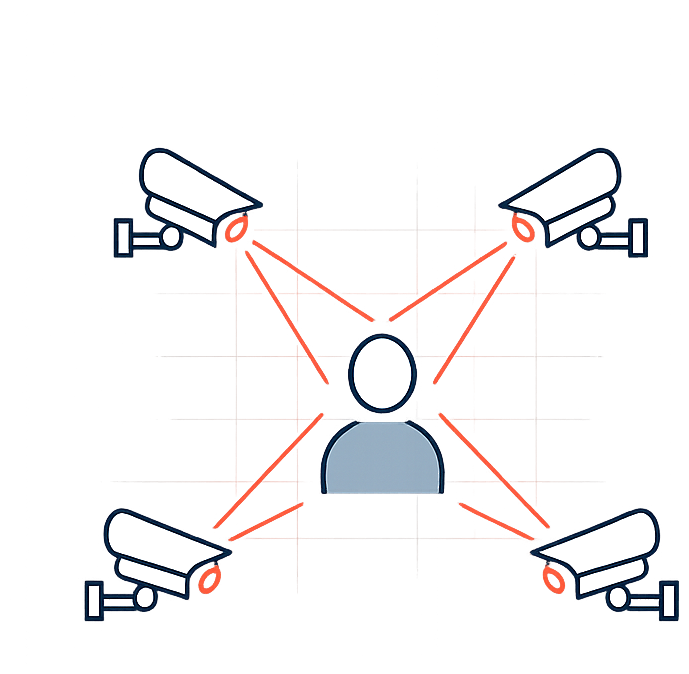
They Monitor You
Current AI watches what you do, what you click, what you say — and adapts to keep you engaged. It tracks your patterns, preferences, and behaviors.
Nobody Monitors Them
But no one watches the AI. There is no persistent mechanism to evaluate whether the system's behavior is drifting from its original purpose, values, or safety boundaries.
The Stakes Are Rising
As AI becomes embedded in physical companions, classrooms, healthcare, and homes, the need for behavioral governance becomes urgent.
- AI companions are entering children's lives without alignment safeguards
- Long-term AI relationships require behavioral stability and trust
- Educational and healthcare environments demand predictable, governed behavior
- Families need transparency and control over how AI influences development
There Is a Better Way
PlayBig AI introduces alignment governance — AI that monitors and corrects its own behavior, not just the user's.
See the Architecture